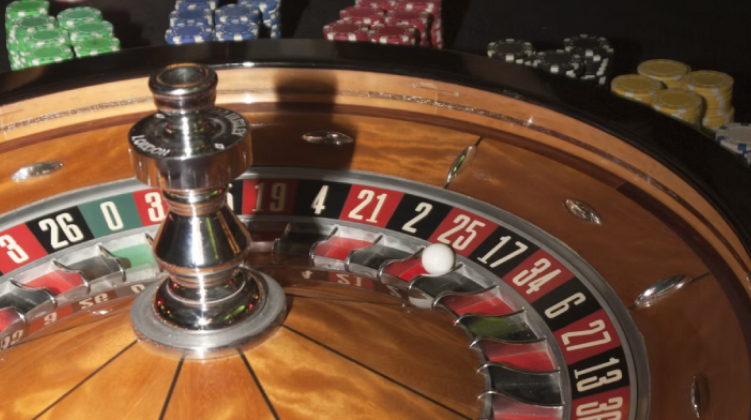
Table Limits Exist to Protect the House and Occasionally You
Walk up to any blackjack or roulette table and the first thing posted on a small card is a range: a minimum bet and a maximum bet. Most players glance past it on the way to the felt, but that number pair is doing serious mathematical work behind the scenes, shaping how much a casino can lose in one bad session and how much a player can realistically win before the house quietly caps the upside.
A handful of operators now publish those ranges online before you even open a game, which matters more than it sounds. On x3 bet casino, the live-dealer roulette tables list a €1 minimum next to a €5,000 maximum right in the lobby, letting a player size a session in advance rather than discovering the ceiling only after a lucky streak bumps against it three spins in.
Why Casinos Set a Ceiling at All
A casino’s edge on any given game is small and steady – roughly 1.06% on double-zero roulette, closer to 0.5% on well-played blackjack. Over ten thousand spins that edge grinds out a predictable profit. Over ten spins it means almost nothing, and a single lucky high-roller could walk away with a number that dents the night’s revenue.
The maximum bet exists to cap that variance. If the table tops out at €500 a spin, the worst-case loss on any one bet is bounded, no matter how the wheel behaves. Casinos are effectively buying insurance against short-term bad luck by refusing to let any single wager get large enough to matter against the house’s total bankroll.
- A table with a €5–€500 range absorbs roughly ten times more variance risk than a €1–€50 table, purely from bet size.
- Progressive betting systems (Martingale, Fibonacci) are neutralized once a losing streak forces a bet past the ceiling.
- High-stakes players are often routed to private rooms with separate, higher limits rather than raising a public table’s cap.
Doubling Streaks Hit a Wall
A player chasing losses with a doubling strategy needs the table to tolerate an unbroken run of increases. Six consecutive doubles on a €5 starting bet already reaches €320, and a seventh push crosses most mid-tier maximums outright. The limit isn’t arbitrary cruelty – it’s the one mechanism that reliably breaks a mathematically doomed system before it can do real damage.
Whales Get Their Own Room
Casinos that want to keep seven-figure players happy don’t raise the public maximum; they build a separate room with its own limits, sometimes ten or twenty times higher than the main floor. That separation keeps the statistical exposure contained to a small, closely watched pool of tables instead of spreading unlimited risk across every seat in the building.
| Game type | Typical minimum | Typical public maximum |
| Live roulette | €1-€5 | €2,000-€5,000 |
| Blackjack | €5-€10 | €1,000-€10,000 |
| Baccarat | €10-€25 | €5,000-€50,000 |
| Poker cash tables | €0.10/€0.20 blinds | Buy-in dependent |
Those ranges vary by operator and jurisdiction, but the pattern holds everywhere a table game is dealt: the gap between minimum and maximum widens as the game’s own variance grows, since baccarat’s occasional big swings need more room than roulette’s steadier grind.
The Minimum Protects Players Too
It’s easy to assume the floor only exists to guarantee the house a baseline profit per hand, and that’s part of it – a €1 minimum on a table that costs money to staff and run needs enough volume to be worthwhile. But the minimum also stops a session from becoming meaningless. A €0.01 bet produces outcomes too small to matter, and a game with no real stake stops teaching a player anything about how variance actually behaves.
Set correctly, a minimum keeps a session’s wins and losses large enough to feel real without letting a short losing streak wipe out a week’s entertainment budget in ten minutes. Choosing a table near the low end of its range, rather than the table’s true floor, gives a player more hands per euro of bankroll and a longer, calmer session before the math catches up either way.
Reading the Card Before You Sit Down
The posted limits tell a player exactly how much room they have to operate before starting a single hand. A table’s maximum divided by its minimum gives a rough sense of how much variance a table is built to absorb – a 5000x ratio behaves very differently from a 100x one, even at the same game.
Checking that ratio against your own bankroll, rather than just picking a table by look or crowd size, is the single cheapest habit a table game player can build. It costs nothing, takes ten seconds, and quietly does more to keep a session sustainable than any staking system ever will.